
The beverage industry faces a constant challenge: keeping drinks fresh, safe and sealed during storage and transport. An automatic cup sealer machine transforms this challenge into an opportunity. These machines bond plastic film to cups with heat and pressure, creating a secure seal that prevents spills and contamination.
Businesses serving thousands of customers daily need packaging solutions that work. Cup sealers deliver this reliability. They work around the clock, handling cups of different sizes and materials. From bubble tea shops to juice bars, these machines prove their worth by cutting waste and boosting efficiency.
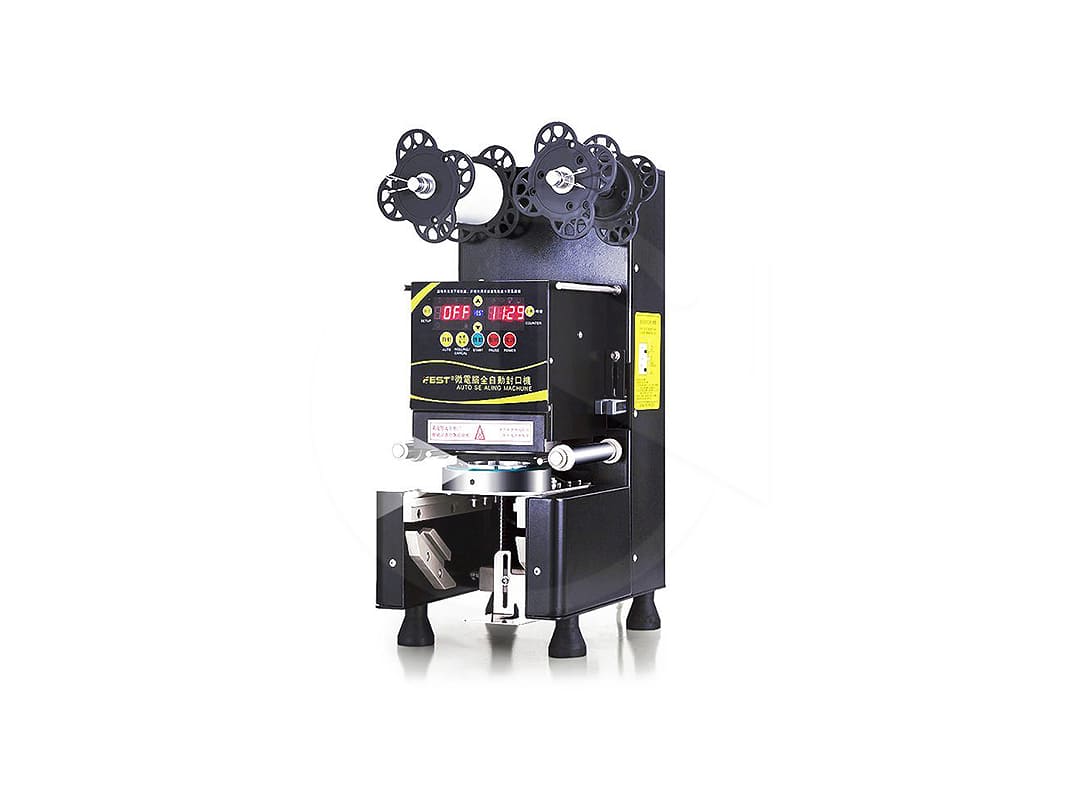
The shift towards automation in beverage packaging happens because manual sealing costs money and produces inconsistent results. Machines eliminate human error. They seal every cup to the same standard, creating customer confidence and brand loyalty.
What is a Cup Sealer?
A cup sealer is a machine that bonds a protective film layer to the top of a cup containing liquid. Think of it as a guardian for your beverage. The machine uses heat and pressure to fuse the film material to the cup rim, creating a permanent seal.
This seal keeps the drink inside the cup and contaminants outside. The process takes seconds per cup, making it practical for high-volume operations.
Cup sealers work with various container types:
- Paper cups
- Plastic cups
- Foam cups
- PET containers
- Specialty cups
The film materials range from standard plastic to biodegradable options. Business owners choose materials based on their brand values and customer needs.
How an Automatic Cup Sealer Works
The mechanics behind cup sealing blend simplicity with precision. Here’s what happens when you load a cup:
The machine draws a heating element downward onto the cup. This element warms the film to its melting point. Pressure from the sealing head bonds the film to the cup rim permanently. The entire cycle takes between two and five seconds per cup.
The heating temperature varies based on film type and cup material. Most machines operate between 150 and 180 degrees Celsius. Once the seal cures, the film bonds become unbreakable without cutting.
Pneumatic systems power most commercial models. Compressed air drives the sealing head up and down. This creates consistent pressure across the cup opening. Some machines feature adjustable pressure settings for different cup sizes and materials.
The motor that rotates the sealing plate completes the mechanism. This rotation ensures even heat distribution. Without it, certain spots on the cup rim would seal poorly while others overheated.
Industries That Use Cup Sealers
Cup sealers populate numerous commercial settings. Understanding where these machines work reveals their value:
Food and Beverage Sector
Tea and coffee shops run dozens of cups through sealers daily. Bubble tea establishments depend on them completely. Juice bars, smoothie shops and milk tea cafes cannot operate without reliable sealing equipment.
Pharmaceutical Industry
Medical facilities seal cups containing sample materials and medications. The seal prevents contamination and maintains specimen integrity for testing.
Chemical and Laboratory Services
Research facilities seal containers with various liquids and compounds. The seal protects workers and maintains experimental conditions.
Frozen Dessert Shops
Yoghurt shops and ice cream parlours seal containers to prevent spills during transit.
Types of Cup Sealers
Different business models call for different sealing solutions. The market offers several types:
Manual Cup Sealers
These machines require an operator to place each cup and activate the sealing cycle. They cost less than automatic versions but demand constant human attention. Small shops with low volume favour these models.
Semi-Automatic Cup Sealers
The machine completes the sealing cycle automatically once you position the cup. The operator still loads and removes cups. These machines balance affordability with efficiency.
Fully Automatic Cup Sealers
These workhorses accept cups through a continuous conveyor system. Operators load stacks of cups and the machine handles everything else. The output reaches 500 to 1,000 cups per hour depending on the model.
Rotary Cup Sealers
Multiple sealing heads work on a rotating platform. As the platform turns, each head seals a cup position. These machines achieve maximum output for busy operations.
Why Businesses Prefer Automatic Cup Sealers
Business owners choose automation for concrete reasons. Let’s examine their motivations:
Speed and Volume
Automatic machines seal cups far faster than manual methods. A manual operator might seal 60 cups per hour. A fully automatic machine seals 500 cups per hour. This speed difference transforms profit margins.
Consistency
Every cup receives identical sealing treatment. No weak seals, no under-heating, no over-heating. Customers receive perfectly sealed drinks every time. This uniformity builds trust.
Labour Cost Reduction
One operator can supervise multiple automatic machines. The machines handle the repetitive work. Businesses reassign staff to customer service and product preparation instead.
Quality Control
Machines produce documentation of sealing parameters. This data proves product quality to customers and regulators. Recall situations become easier to manage with verified records.
Reduced Waste
Automatic machines make fewer errors. Fewer failed seals mean fewer wasted cups and beverages. The savings compound over thousands of cups.
Key Features to Consider Before Buying a Cup Sealer
Purchasing the right machine requires understanding these core features:
Sealing Temperature Control
Machines with adjustable temperature settings adapt to different film types. Look for digital displays that show exact temperatures.
Pressure Adjustment
Variable pressure settings prevent damage to delicate cups while ensuring strong seals. This flexibility matters when switching between cup materials.
Cup Diameter Range
Machines accommodate different cup sizes. The range might extend from 70mm to 110mm diameter. Check that your cups fall within the machine’s range.
Sealing Speed
Measured in cups per minute, this determines your hourly output. A machine sealing 8 cups per minute produces 480 cups per hour.
Power Requirements
Some machines need 220V electricity. Others run on standard 110V outlets. Confirm your facility has adequate electrical infrastructure.
Film Compatibility
Not all machines work with every film type. Verify that your chosen film material bonds properly with the machine’s heating element.
Warranty and Support
Machines break. Manufacturer support determines downtime length. Seek companies offering quick response times and genuine replacement parts.
Cup Materials Supported
Cup sealers work with specific materials. Understanding compatibility prevents purchasing mistakes:
Plastic Cups
These remain the most common choice. PP (polypropylene) and PET (polyethylene terephthalate) cups seal beautifully. The film bonds rapidly to plastic surfaces.
Paper Cups
Paper cups coated with plastic allow sealing. The plastic interior layer receives the film seal. Pure paper without coating cannot seal properly.
Foam Cups
Expanded polystyrene (EPS) foam cups seal successfully. The film adheres to the foam rim without deforming the cup.
Biodegradable Cups
Compostable materials made from plant-based plastics seal effectively. These cups appeal to environmentally conscious businesses.
Metal-Lined Cups
Certain specialty cups feature metal reinforcement. The sealing film bonds to the metal rim securely.
Beverage Types Suitable for Cup Sealing
Not every drink works equally well with sealed cups. Consider these factors:
Hot Beverages
Tea, coffee and hot chocolate seal well. The heat doesn’t damage the film during sealing. However, the customer must perforate the film to drink.
Cold Drinks
Iced tea, cold coffee and smoothies seal perfectly. Cold beverages don’t degrade the film materials.
Carbonated Drinks
Sealed drinks with carbonation face challenges. The seal prevents pressure release. Some machines accommodate CO2 by including release valves.
Thick Drinks
Bubble tea, tapioca drinks and protein shakes seal without issues. The thickness doesn’t affect sealing effectiveness.
Dairy Products
Yogurt, milk and cream-based drinks seal easily. The smooth cup rim accepts film adhesion.
Benefits of Using a Cup Sealer
The advantages extend beyond simple packaging:
- Leak Prevention – Sealed cups eliminate spills during transport and handling
- Shelf Life Extension – The seal delays oxidation and contamination, extending product freshness
- Tamper Evidence – Customers see immediately if someone opened their drink before purchase
- Branding Opportunity – Film can display logos, colours and messaging
- Customer Satisfaction – Professional packaging conveys quality and care
- Cost Savings – Reduced waste and labour offset machine expenses within months
- Food Safety Compliance – Sealed packaging meets health department requirements
- Product Protection – The seal shields beverages from environmental contaminants
Why Leak-Proof Packaging Matters
Leaking drinks destroy customer experience and brand reputation. Picture a customer receiving a damaged drink. The liquid soaks their clothing, their bag, their belongings. That customer never returns.
Businesses lose money through multiple channels when leaks occur. Direct costs include replacement drinks. Indirect costs include damaged property compensation and lost customer lifetime value. One leak can cost more than a year of perfect sealing.
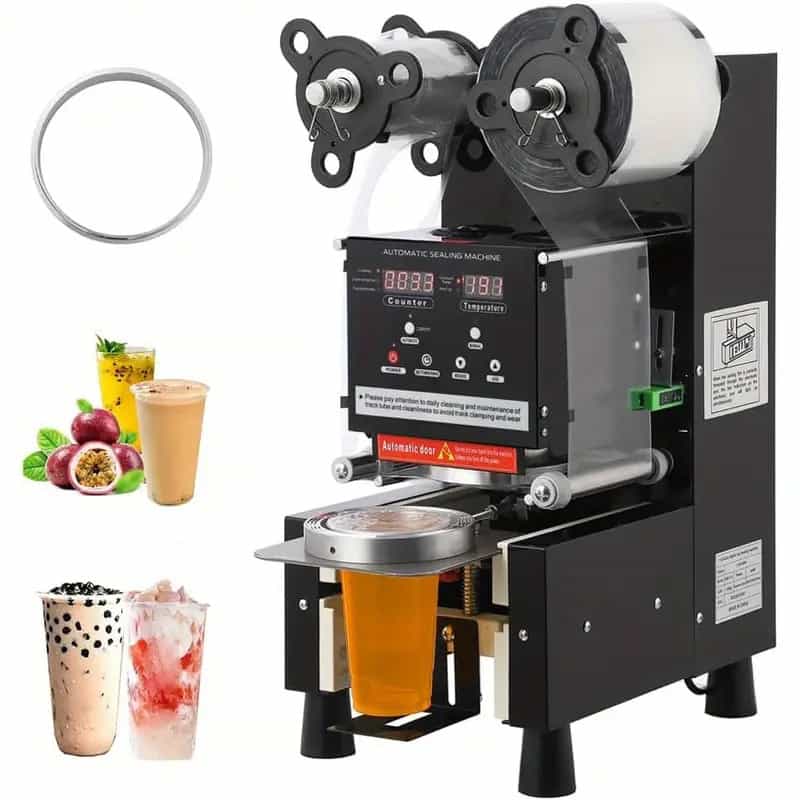
Sealed cups prevent these disasters. The film bond holds firm through rough transport, temperature changes and pressure fluctuations. Customers receive beverages exactly as prepared.
Restaurants and shops near transport hubs face particular challenges. Delivery drivers, passengers and hurried commuters jostle cups constantly. Sealed packaging survives this chaos where regular lids fail.
How to Choose the Right Cup Sealer
Decision-making becomes clear when you gather specific information:
Assess Your Volume
Count your daily cup output. Multiply by growth projections. A business sealing 300 cups daily needs different equipment than one sealing 3,000 cups daily.
Evaluate Your Cup Specifications
Measure cup diameter, height and rim width. Verify that machines you’re considering accommodate these dimensions. Test fit actual cups whenever possible.
Research Film Options
Different films offer different benefits. Standard plastic costs less but lacks biodegradability. Plant-based films cost more but appeal to eco-conscious markets. Find films matching your values and budget.
Calculate Long-Term Costs
Purchase price matters, but operational costs determine true value. Factor in electricity consumption, film expense and maintenance costs. Spread these across projected cup volume.
Visit Existing Operations
Observe cup sealers in action at similar businesses. Ask operators about reliability, maintenance frequency and customer satisfaction.
Request Demonstrations
Manufacturers often demonstrate machines using your actual cups and films. This hands-on experience reveals whether the machine suits your needs.
Common Mistakes When Buying a Cup Sealer
Businesses make predictable errors when purchasing sealing equipment:
Underestimating Volume Growth
A startup that anticipates 500 daily cups often reaches 2,000 cups within a year. Purchasing a slow machine forces costly upgrades.
Ignoring Film Costs
The cheapest machine becomes expensive if film costs run high. Compare total ownership expenses, not just purchase price.
Neglecting Space Requirements
Some machines demand substantial floor space. Automatic models need conveyor clearance. Measure your space before committing to purchase.
Overlooking Training Needs
Complex machines require operator training. Budget for this investment beyond equipment cost.
Buying Without Testing
Never purchase a machine without sealing your actual cups first. Film and cup compatibility cannot be assumed.
Skipping the Warranty Review
A machine failing after one year without warranty support devastates operations. Prioritise manufacturer support over lowest prices.
Maintenance Guide
Proper maintenance keeps machines running for years:
Daily Maintenance
- Inspect the sealing plate for film residue and clean if necessary
- Verify heating elements reach proper temperature
- Test cycle times on sample cups
- Check for loose bolts or visible damage
Weekly Maintenance
- Clean the entire exterior with appropriate cleaner
- Inspect pneumatic hose connections
- Test pressure gauge accuracy
- Review sealing quality samples
Monthly Maintenance
- Replace worn sealing plates if damage appears
- Inspect electrical connections for corrosion
- Flush pneumatic system filters
- Calibrate temperature settings
Annual Maintenance
- Have a technician perform comprehensive inspection
- Replace worn gaskets and seals
- Update electrical components if needed
- Verify all safety features function properly
Common Cup Sealer Problems and Solutions
Machines occasionally develop issues. Quick diagnosis prevents prolonged downtime:
Poor Seal Quality
The film bonds incompletely to the cup. Check temperature settings first. Temperature too low prevents proper fusion. Temperature too high damages film. Verify that film and cup materials match machine specifications.
Inconsistent Sealing Speed
Cycles take variable times to complete. The pneumatic system might lose pressure. Check compressor output and hose connections. Worn cylinders also cause speed variations.
Film Jams
Film tangles during cycles. This occurs when film rolls aren’t centred properly. Reposition the film roll. Ensure feed mechanisms align correctly.
Overheating Elements
The machine operates but doesn’t seal effectively. Heating elements degrade over time. Temperature sensors might misread actual temperatures. Replace faulty sensors or heating elements.
Electrical Failures
The machine won’t power on. Check circuit breakers and outlet functionality. Verify power cable connections. Damaged power cables need replacement.
Cup Sealer vs Traditional Plastic Lids
Sealing film and traditional lids represent competing approaches to beverage containment:
Sealing Film Advantages
- Superior leak prevention
- Tamper-evident design
- Custom branding opportunities
- Reduced contamination risk
- Professional appearance
- Extended product freshness
- Recyclable and biodegradable options available
Traditional Lid Advantages
- Lower per-unit cost
- Customers can drink without perforation
- Easier manual application
- No machine investment needed
- Familiar customer experience
Many successful businesses combine both approaches. Sealed cups for takeaway and delivery, traditional lids for on-site consumption. This hybrid strategy maximises customer satisfaction across different situations.
Why Sealed Packaging Transforms Beverage Businesses
Sealed cups convert beverage operations in measurable ways. Customers perceive sealed drinks as higher quality and safer than traditional lids. This perception supports premium pricing.
Delivery operations become viable with sealed packages. Customers receive perfect products after twenty-minute journeys. This reliability builds repeat business and enables app-based ordering.
Social media amplifies the benefits. Customers photograph and share their drinks. Professional sealed packaging photographs beautifully. Casual lids look ordinary.
Employee pride increases with superior equipment. Staff working with reliable, modern machines feel valued. This translates to better customer service and lower turnover.
Conclusion
Automatic cup sealer machines revolutionise beverage packaging operations. They eliminate consistency problems while cutting labour costs dramatically. The investment pays for itself through reduced waste and increased output capacity.
Selecting the right machine requires honest assessment of your volume, cup specifications and growth plans. Testing before purchase prevents costly mistakes.
Properly maintained machines deliver years of reliable service. The result transforms your business: faster service, happier customers, stronger profitability.
FAQ’s
1. How long does the sealing process take?
The sealing cycle completes in two to five seconds depending on cup size and machine model. Fully automatic machines maintain this speed for hundreds of cups hourly without operator fatigue.
2. Why do companies use a powder filler for dry goods?
Standard plastic film works for most drinks including tea, coffee and cold beverages. Thicker films suit carbonated drinks and prevent pressure buildup issues effectively.
3. Can I seal cups of different sizes on one machine?
Most machines accommodate size ranges from 70mm to 110mm diameter cups. Adjustable settings let operators switch between sizes quickly without mechanical modifications needed.
4. How do I know if my current cups are compatible?
Check that your cups have plastic-coated rims and fit within the machine’s diameter range. Request a demonstration from manufacturers using your actual cups before commitment.